---
title: Celebrating Buffalo250
---
# Celebrating Buffalo250!
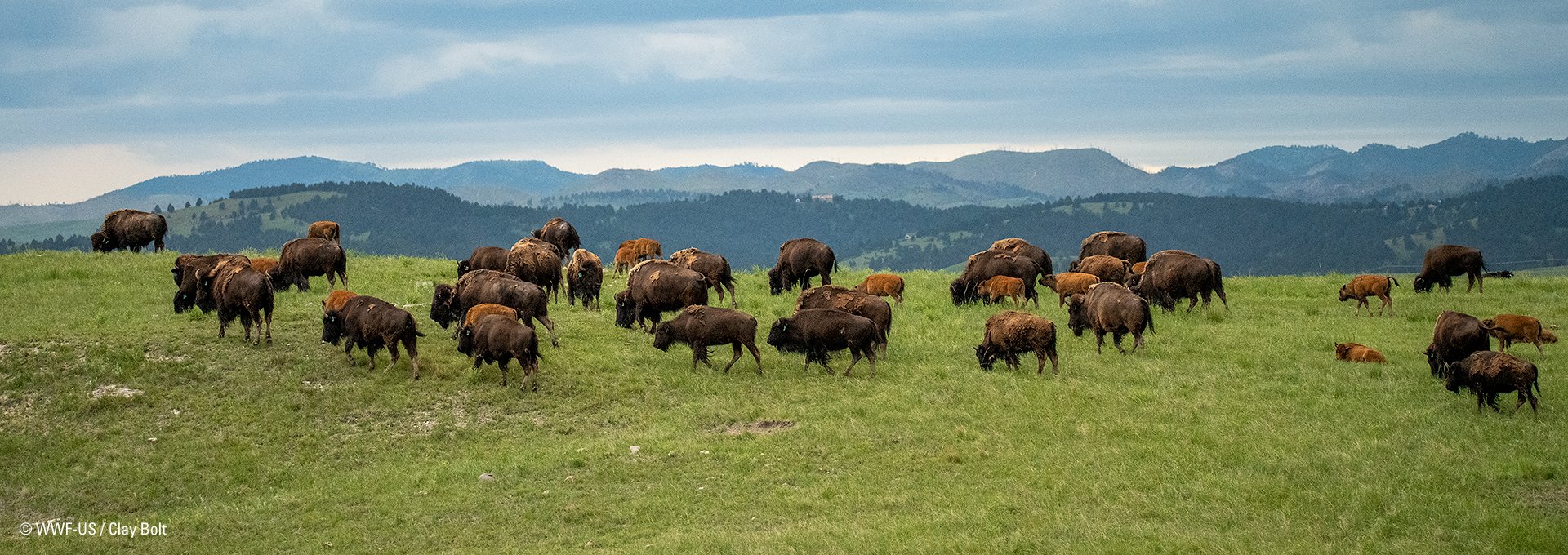
This year is the 250th anniversary of the United States and the 10th anniversary of Congress’s designation of the bison as the national mammal. These anniversaries invite reflection not only on our nation’s history, but on one of its most enduring and powerful symbols. The plains bison—often called buffalo—is a species whose story is inseparable from our own as a nation.
Once numbering an estimated 30 to 60 million, North America's plains bison shaped the ecology of the Great Plains for thousands of years. Their grazing patterns sustained diverse native grasses, their wallows created habitat for birds and insects, and their presence supported entire ecosystems. For many Native Nations, buffalo are more than wildlife—they are relatives, providers, and central to culture, ceremony, spirituality, and identity. By the late 1800s, commercial hunting and westward expansion had driven the species to the brink of extinction, reducing the population to just a few hundred animals.
Today, thanks to Tribal leadership, conservationists, ranchers, private landowners, and public agencies, bison have rebounded to roughly 500,000 animals across North America. A small fraction is managed for conservation purposes in large, wide-ranging herds. The work of true restoration—returning buffalo to landscapes where they can once again shape grassland ecosystems—continues.
Throughout this commemorative year, we invite you to learn about the growing movement to restore this iconic species to the American landscape.
1. Explore the organizations leading this effort
2. Attend buffalo related events and museums in your region, and
3. Visit a buffalo herd with your family this summer
Discover how you can be part of the next chapter in the buffalo’s story!
Below you'll find links to our Bison Events Calendar, an Interactive Road Trip Map featuring opportunities to see bison across the US, and North American organizations participating in #Buffalo250.
### Events Calendar:
Across America, more is being done than ever before to restore bison to the landscape. Native Nations are leading historic reintroduction efforts. Conservation groups are expanding habitat and improving genetic diversity. Museums, schools, and community organizations are sharing the story of the buffalo’s near-loss and remarkable return.
Our Events Calendar highlights opportunities to learn, celebrate, and engage—from educational programs and cultural gatherings to policy discussions and prairie restoration tours. These events reflect the scale and diversity of the buffalo restoration movement.
### Interactive Map: Roadtrip Buffalo250:
Curious to see buffalo in person? Our Interactive Road Trip Buffalo250 Map helps you plan your journey.
Across the country, you’ll find herds roaming protected prairies, historic sites that tell the story of near-extinction and recovery, Tribal lands where buffalo restoration is reconnecting culture and ecology, private bison ranches, and museums and visitor centers dedicated to this national mammal. From the Northern Plains to the Midwest and beyond, these locations offer a chance to witness one of America’s most iconic species on the landscape once again.
Use the map to explore federal, Tribal, and private bison herds, cultural sites, museums, businesses, and other buffalo-related destinations.\* Whether you’re planning a cross-country adventure or a local day trip, you can “join the herd” online by sharing your experiences and tagging your posts with #Buffalo250, #Bison250, #BisonNationalMammal10th, #BuffaloNationalMammal10th
\*Please note, each bison herd's management team has unique visitation policies. Before visiting, take a moment to research each location to ensure public access is welcome.
### Links to Participating Organizations:
The restoration of buffalo is a shared endeavor between the Federal government, Native Nations, nonprofits, conservation groups, zoos, museums, private ranchers, academic institutions, associations, and government agencies. Together, these partners are working to expand habitat, strengthen genetics, support Tribal food sovereignty, restore grasslands, provide healthy protein, and educate the public about the buffalo’s enduring importance.
Browse the participating organizations below to learn more about their work and how you can support their efforts.
##### **Bison Producers**
- [National Bison Association](https://nationalbison.org/)
- [Tanka Fund](https://www.tankafund.org/)
## **Tribal Leaders**
- [Aaniiih Nakoda College Buffalo Research Education Center](https://www.ancollege.edu/)
- [Cheyenne River Buffalo Authority](https://www.dakotarural.org/localfood/cheyenne-river-sioux-tribe-buffalo-authority-corporation/)
- [Coalition of Large Tribes](https://largetribes.org/)
- [Confederated Salish & Kootenai Tribes](https://cskt.org/)
- [Indigenous Led](https://www.indigenousled.org/)
- [International Buffalo Relations Institute](https://www.buffalorelations.org/)
- [InterTribal Buffalo Council](https://www.itbcbuffalonation.org/)
- [Native Americans in Philanthropy](https://nativephilanthropy.org/)
- [NDN Collective](https://ndncollective.org/)
- [Sicangu Co](https://www.sicangu.co/)
- [Tribal Buffalo (Tribal Buffalo Lifeways Collaboration)](https://www.tribalbuffalo.org/?hsLang=en)
- [WoLakota (Rosebud)](https://www.sicangu.co/wolakota)
## **Tribal Education**
- [American Indian Higher Education Consortium](https://www.aihec.org/)
## **Native Meat Processing**
- [Flower Hill Institute](https://flowerhill.institute/)
## **Conservation Orgs, Education, and Institutions**
- [Association of Zoos and Aquariums](https://www.aza.org/)
- [Defenders of Wildlife](https://defenders.org/)
- [National Bison Foundation](https://nationalbison.org/)
- [National Museum of the American Indian](https://americanindian.si.edu/)
- [National Museum of Natural History](https://naturalhistory.si.edu/)
- [National Wildlife Federation](https://www.nwf.org/)
- [The Nature Conservancy](https://www.nature.org/en-us/)
- [Saint Louis Zoo](https://stlzoo.org/)
- [Sierra Club](https://www.sierraclub.org/)
- [Smithsonian Institute](https://www.si.edu/)
- [Smithsonian Zoo](https://nationalzoo.si.edu/)
- [University of Illinois at Urbana-Champaign](https://illinois.edu/)
- [Wildlife Conservation Society](https://www.wcs.org/)
- [Wildlife Restoration Foundation](https://www.wildlifeandparks.org/)
- [World Wildlife Fund](https://www.worldwildlife.org/)
## **State and Federal Partners**
- [US Department of Agriculture, Office of Tribal Relations](https://www.usda.gov/about-usda/general-information/staff-offices/office-tribal-relations)
- **[US Department of the Interior, Bureau of Indian Affairs](https://www.bia.gov/)**
- [National Park Service](https://www.nps.gov/)
- [National Science Foundation](https://www.nsf.gov/)
```json
{
"@context": "http://schema.org",
"@type": "Organization",
"mainEntityOfPage":{
"@type":"WebPage",
"@id":"https://www.tribalbuffalo.org/celebrating-buffalo250",
"description": ""
},
"url": "/",
"logo": "https://46502900.fs1.hubspotusercontent-na1.net/hubfs/46502900/Tribal-Buffalo-Lifeways-Collaboration-logo-nomark.png",
"image": "https://46502900.fs1.hubspotusercontent-na1.net/hubfs/46502900/tribal-buffalo-lifeways-collaboration-og.jpg",
"name": "",
"alternateName": "Tribal buffalo",
"description": "A historic new alliance created to stabilize, establish, and expand Tribal-led buffalo restoration",
"telephone": "",
}
```